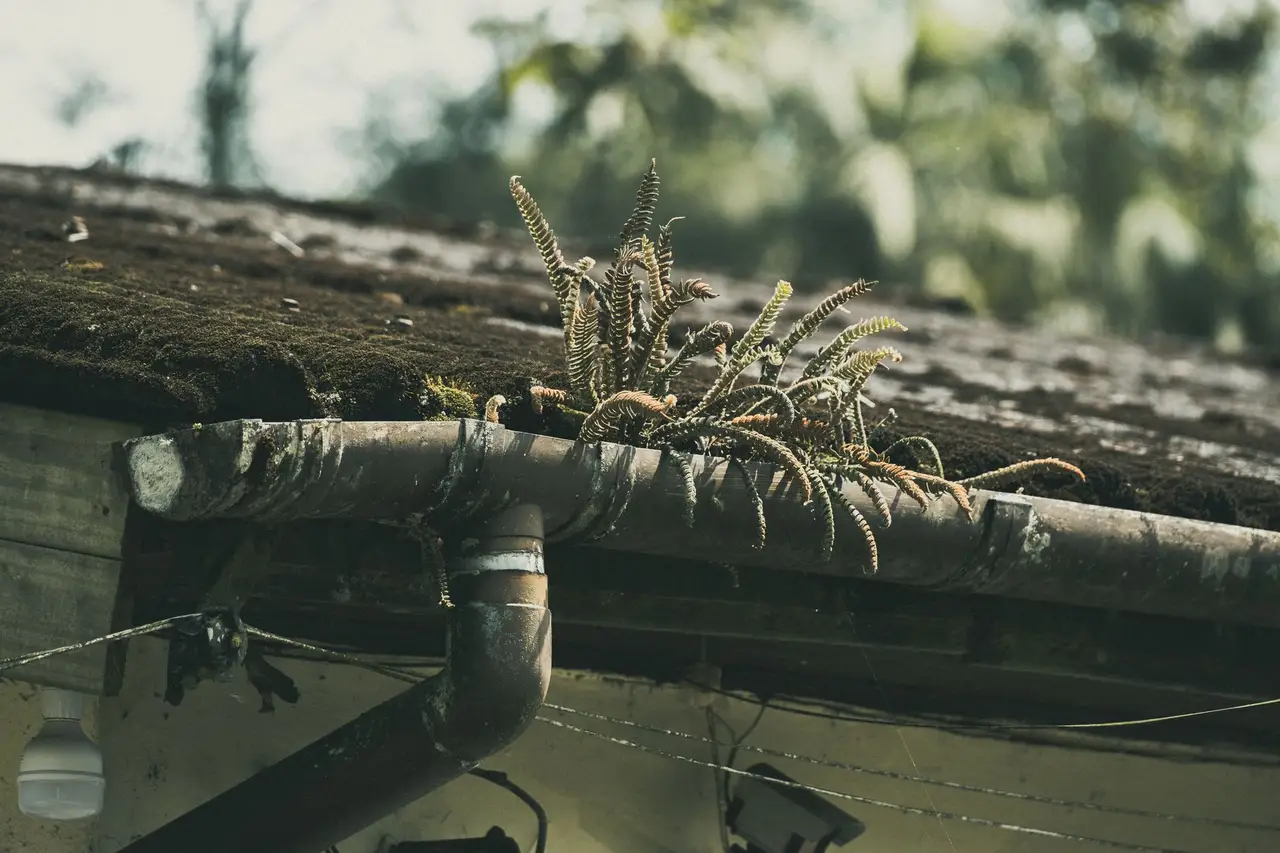
For homes
We fit guards on single-family homes and rentals across Fayetteville. You get a cleared trough, a sealed cover, and a water test before we leave.
- Pine needles over the back run
- Two-story front gutter overflow
- Stains down the siding
Our gutter guards installation Fayetteville NC service keeps leaves, pine needles, and shingle grit out of your gutters so water runs where it should. We fit aluminum and steel systems on homes and small commercial buildings across Cumberland County, usually in a single visit. If your gutters overflow every fall, this is the fix.
 Check gutter pitchClear the troughTest water flow
Every installation starts with a cleared, inspected gutter and ends with a water test. If a run needs repair before a guard can go on, we tell you on the walkthrough and price it separately so there are no surprises.

We remove leaves, needles, and grit with a gutter scoop and leaf blower, then flush the runs. Guards over packed debris trap moisture and rot the trough, so this step is never skipped.
We test each downspout and run a downspout snake through any that drain slow. A clear downspout is what makes the whole system work, and it is the part most guard jobs ignore.
Sections are cut to fit corners and outlets, fastened to the front lip and fascia, and sealed with gutter sealant. We check that the guard does not block flow into the downspout.
If a run holds water, we tighten hangers and correct the pitch so water moves toward the outlet. A guard on a flat gutter just hides the problem.
We run water down the roof, watch it exit the downspout, and fix any drip or backup on the spot. Then we clean the work area and walk you through what was installed.
The approach is the same for a home and a business. What changes is the access, the schedule and who needs the paperwork.
We fit guards on single-family homes and rentals across Fayetteville. You get a cleared trough, a sealed cover, and a water test before we leave.
We handle duplexes, HOA common areas, and small commercial roofs. Work is scheduled around tenants and business hours so nobody is blocked.
A plain-language look at what Gutter Guards Installation & Leaf Protection involves and when it is needed.
See how it worksGutter guards installation Fayetteville NC means fitting a screen, mesh, or hooded cover over your existing gutters so debris slides off instead of settling in. We measure every run, check the pitch, seal the joints, and mount the guard so it sits flush with the roofline. Water still enters the trough; leaves, pine needles, and grit do not. Most homes take two to four hours, and you can cancel the twice-a-year ladder routine.
Fayetteville sits under a heavy pine canopy, and longleaf and loblolly needles are the worst offender for clogged gutters. Add summer downpours and fall leaf drop, and a bare gutter can overflow within one season. That overflow soaks fascia boards, stains siding, and pools near the foundation. Our leaf protection Fayetteville NC work is sized for that load, not for a mild climate. If you have been searching gutter guard installation near me Fayetteville, this is what the job actually involves.
A guard only works if the gutter underneath is clear, pitched, and draining.
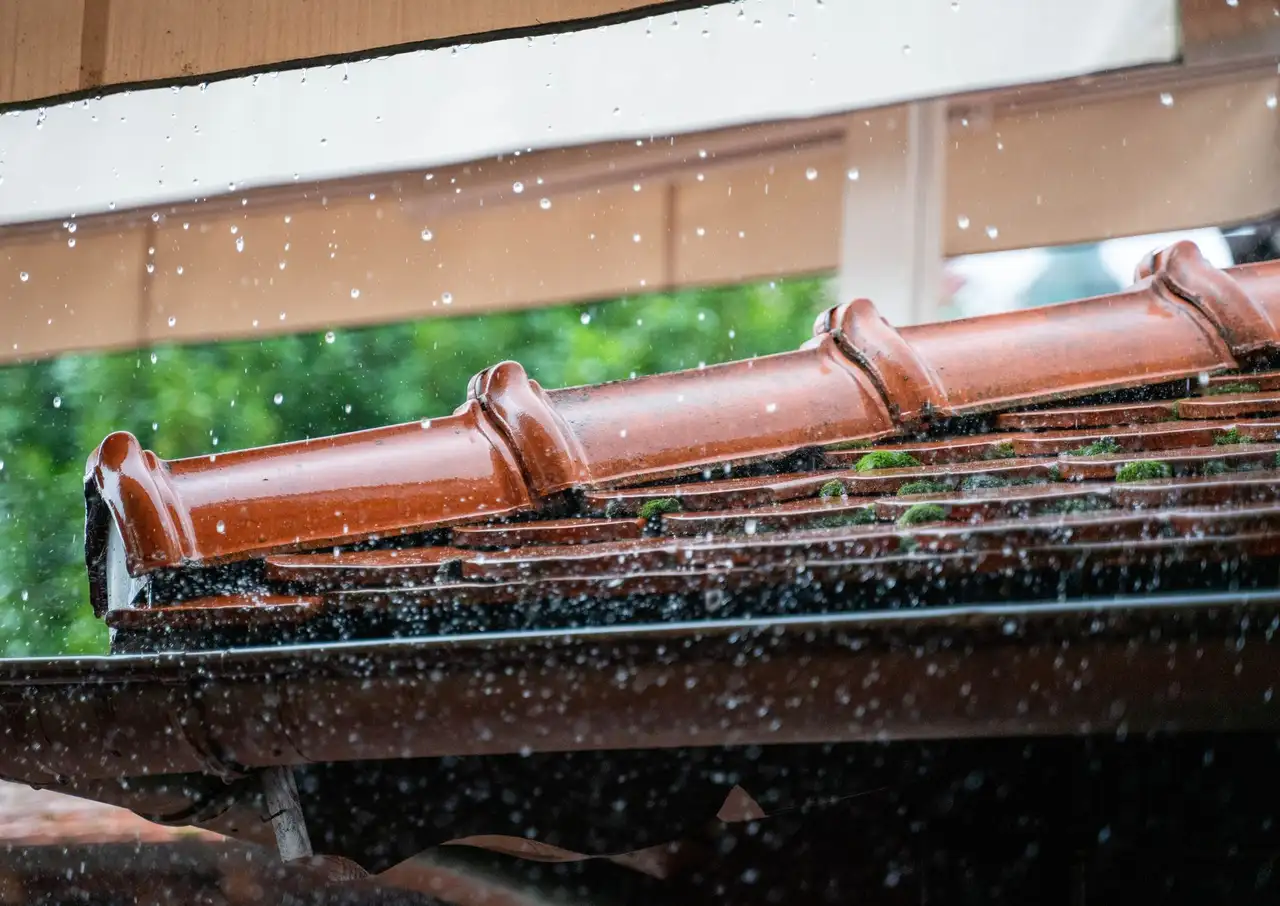
We keep the job simple: one visit for most homes, a clear walkthrough before we start, and a test pour before we pack up. Here is exactly what happens from the driveway to the final check.
We walk the perimeter with you, check gutter pitch, look for sagging gutters, loose hangers, and existing leaks, and note where downspouts discharge. On a two-story home this takes about 20 minutes. You get a straight answer on whether guards make sense or whether the gutters need repair first.

Before any guard goes on, the trough has to be empty. We pull debris with a gutter scoop and leaf blower, flush the runs, and snake the downspouts if they are slow. Skipping this step is why some guard jobs fail within a year, so we do not skip it.
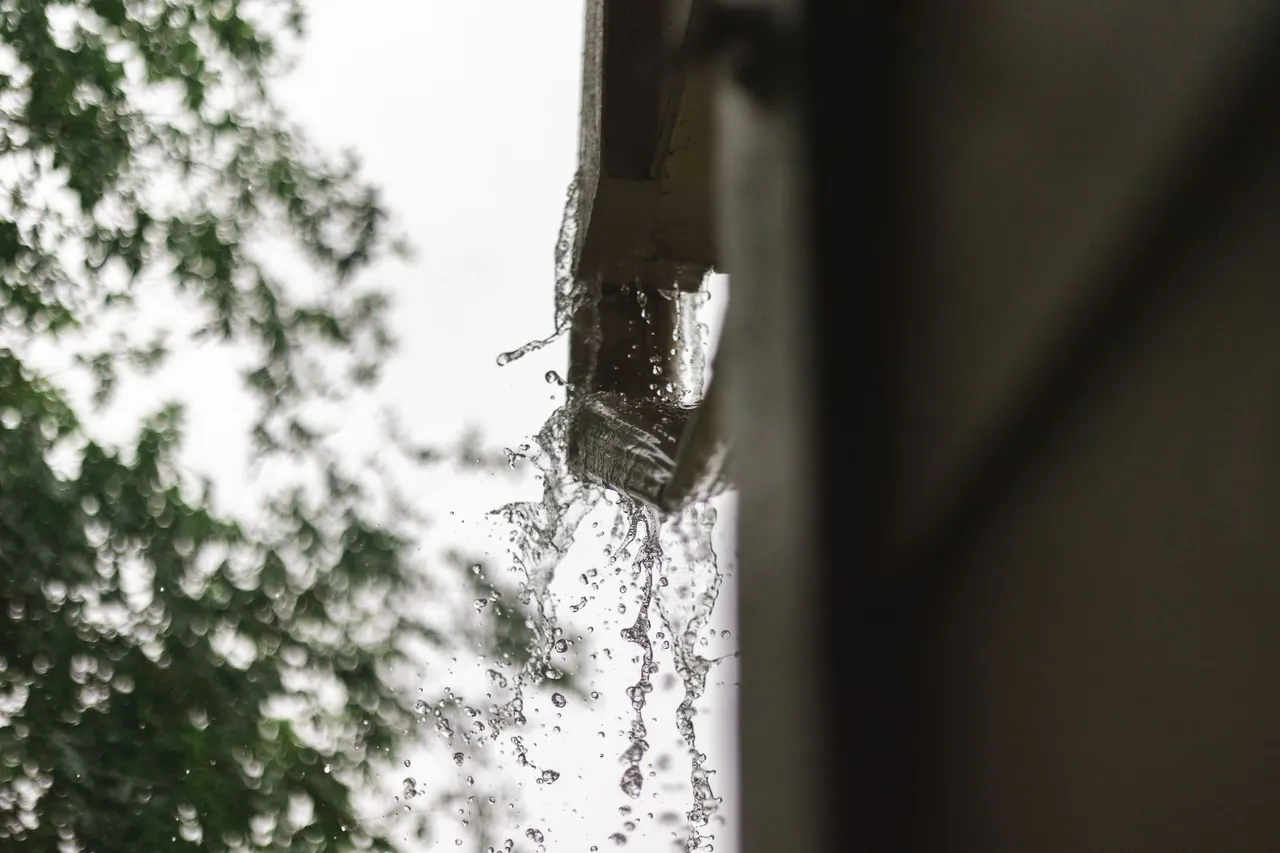
We measure each run and cut guard sections to fit corners, end caps, and downspout outlets. Aluminum and galvanized steel sections get trimmed on site so the cover sits tight against the fascia with no gaps a needle can slip through.

Guards are fastened to the front lip and the fascia, then joints are sealed with gutter sealant rated for outdoor exposure. We check that the guard does not block the flow path into the downspout and that the pitch still moves water toward the outlet.
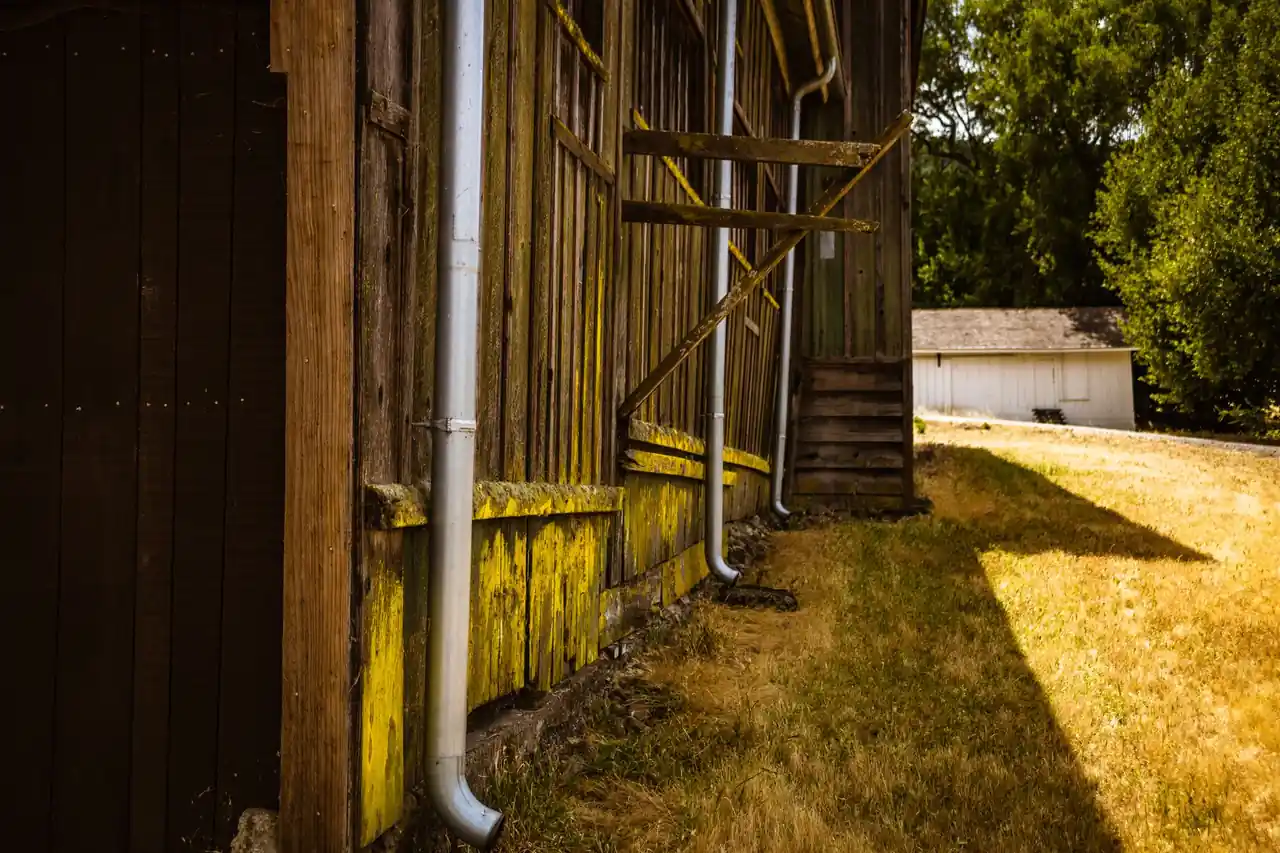
We run water down the roof and watch it exit the downspout. If anything backs up or drips, we fix it before we leave. Then we show you what was installed, how the system handles heavy rain, and what to check after a big storm.
Move across a circle, or focus it and press Enter, for an illustrative thermal view of the photograph.

Hand-clears packed leaves and needles from the trough before any guard is fitted.

Blows loose debris off the roof and out of the gutter run after hand clearing.

Clears blockages inside the downspout so the finished system drains at full flow.

Gets crews to the roofline safely on two-story homes and steep pitches.
Flushes gutter runs and cleans the fascia line before guards are mounted.
Thermal views are illustrative, generated from the photographs.
Seals guard joints and directs downspout discharge away from the foundation.
A fine stainless screen set in an aluminum frame. It blocks pine needles and shingle grit while letting water through, and it is our default on pine-heavy lots.
Water clings to the curved nose and drops into the gutter while debris sheds off the front. Works well on long runs with mixed leaf drop.
We adjust hangers so the run drains toward the outlet. A guard on a flat gutter traps water and speeds up corrosion.
Harness and ladder work follows OSHA safety compliance on every job, including steep pitches and two-story rooflines.

A homeowner under mature pines who clears the gutters three or four times a year.
We clear the runs, fit micro-mesh guards sized for needles, and snake the downspouts. The job usually takes three to four hours on a single-story home.
Outcome: Cleanouts drop to an annual roofline check from the ground. No more ladder weekends.

A two-story home with sagging gutters and stains down the siding.
We repair the hangers, correct the pitch, seal the joints, and install guards on the full run. Any rot in the fascia gets flagged before the guard goes on.
Outcome: Water exits the downspout instead of the front lip, and the siding stays dry.
A property manager with six duplexes and constant tenant complaints.
We spec a heavier guard profile, schedule across two days, and work around tenant parking and quiet hours. Downspouts get snaked and strainers added.
Outcome: Maintenance calls drop sharply and the gutters stop being a recurring line item.

A new homeowner who just paid for fascia repair after years of overflow.
We protect the new fascia with sealed guards and check that every discharge point moves water away from the foundation.
Outcome: The repair holds, and the roofline stays dry through the next storm season.

Fayetteville's tree canopy is the whole story here. Longleaf and loblolly pines drop needles year-round, and the older neighborhoods around Haymount and the Dogwood Acres area have canopies that shed onto the same rooflines for decades. Add summer downpours that dump an inch in under an hour, and a bare gutter overflows fast. We size guards for that load, not for a mild climate.
Homes with copper or galvanized steel gutters get a different profile than vinyl, and we check every discharge point so runoff clears the foundation. If you have been pricing gutter guards installation Fayetteville NC cost, the honest answer is that pine density and roof pitch drive the number more than square footage does.
We also watch for sagging gutters on older homes, because a guard on a failing run just hides the problem until the next storm.
Before: A 180-foot single-story run under four pines was cleared three times a year. The downspout jammed every fall, water ran over the front lip, and the siding had green streaks below the gutter line.
After: We cleared the run, snaked the downspout, corrected the pitch, and fitted micro-mesh guards. Two storms later the outlet still ran clear and the siding stayed dry.
Check the roofline from the ground twice a year and hose the guard surface after heavy pollen. No ladder work needed.
Before: A 1940s home had soft fascia boards along the front run and stains down the brick. Hangers were loose and the gutter held water in the middle of the run.
After: We replaced the damaged fascia section, tightened the hangers, sealed the joints, and installed hooded guards. The run now drains end to end and the brick has stayed clean.
After a big storm, look for water sheeting over the front lip. If you see it, call us and we will check the pitch.
Before: A property manager was fielding tenant complaints about overflowing gutters every month. Downspouts were packed with needles and grit, and two runs had pulled loose at the hanger.
After: We repaired the loose runs, snaked every downspout, added strainers, and installed guards across all six buildings in two days. Cleanout calls dropped to near zero.
We schedule an annual roofline check across the property so nothing backs up before storm season.
Most calls we get start with the same three complaints: water over the front of the gutter, stains down the siding, and a wet spot near the foundation. Here is what is actually happening and how we fix it.
A clear, covered gutter that drains through every storm.
A bare gutter on a pine-heavy lot needs clearing two to four times a year. With gutter covers Fayetteville North Carolina homeowners can stop climbing, stop renting ladders, and stop paying for repeat cleanouts. You check the roofline from the ground instead.
When a gutter overflows, water runs behind the fascia board and rots the wood from the back side. Guards keep the trough flowing so that water exits through the downspout and away from the wall, not down the trim.
A single clogged downspout can dump hundreds of gallons next to your slab during a summer storm. Leaf protection for gutters Fayetteville NC keeps the path clear so runoff reaches the splash block and drains away from the foundation.
Standing water and damp debris in a gutter draw mosquitoes, ants, and roof rats. A covered trough dries faster and gives pests nowhere to nest, which matters in older Fayetteville neighborhoods with mature trees close to the roofline.
Clear records you can keep and share.
Before and after shots of each run.
What was fitted and where.
Where each downspout discharges.
Simple seasonal checks for you.
Pine needles and maple leaves need different guards. Here is how the three main types compare.
Basic mesh that sits in the gutter.
Reverse-curve cover over the run.
A list like this tells people straight away whether you cover their street. Not listed? Call and ask: it only takes a minute.
Based in Fayetteville and covering the places around it. Pick one for local details.
Two-story homes, copper gutters, and steep pitches push the number up. Micro-mesh and hooded systems cost more than basic screens but last longer and handle pine needles better.
Yes, when they are matched to the debris. Pine needles are the real test here, and a fine micro-mesh or hooded guard keeps them out. Cheap screens with wide openings let needles through and clog at the downspout. We clear the gutters first, then fit a guard sized for what falls on your roof.
Micro-mesh uses a fine stainless screen that needles cannot pass, while hooded systems shed debris off the nose of the cover. Both work on aluminum and galvanized steel gutters. We stock LeafFilter, LeafGuard, and GutterGlove profiles and match one to your roof pitch and tree cover.
For most homes under pine canopy, yes. If you pay for two to four cleanouts a year, guards usually pay for themselves in a few seasons and cut the risk of fascia rot and foundation water damage. Homes with almost no tree cover may not need them, and we will tell you that on the walkthrough.
Other services from the same team.
We will walk your roofline, measure the runs, and give you a straight price before any work starts. Call (910) 668-9527 and we will get you on the schedule.
Call us at (910) 668-9527 or email info@fayettevillegutterpros.com. We answer the phone Monday through Friday from 8 a.m. to 6 p.m. and return after-hours messages first thing the next morning.